Charterparty Agreements and Dispute Resolution: Maritime Jurisprudence, Arbitration, and Legal Risk
An in-depth scholarly analysis of charterparty agreements, maritime dispute resolution, safe port warranties, off-hire doctrines, and arbitral enforcement under international law.
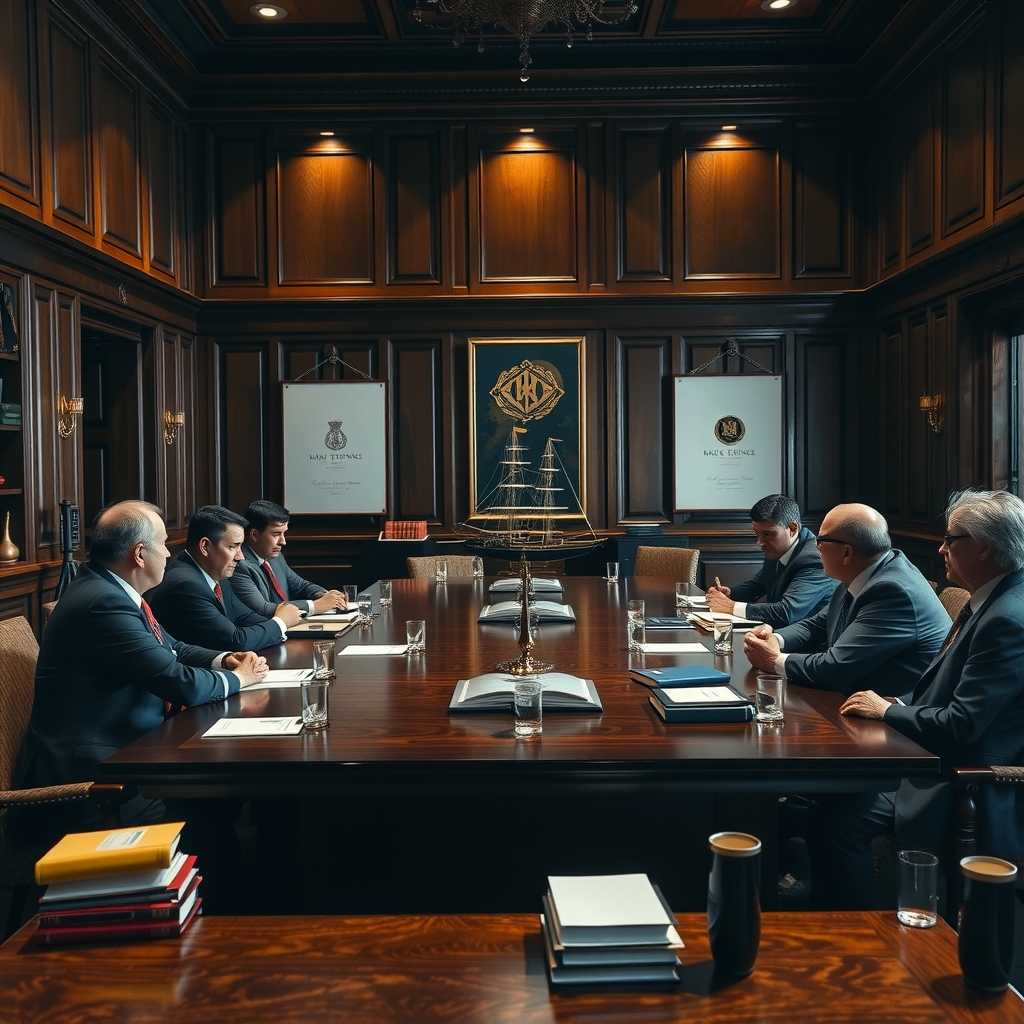
Charterparty agreements form the fundamental framework of international maritime commerce. These contracts regulate the commercial exploitation of vessels, establishing complex risk-allocation mechanisms between shipowners, demise charterers, time charterers, and voyage charterers. Given the volatile environment of international shipping—characterized by geopolitical fluctuations, sovereign border redefinitions, environmental mandates, and market instability—the drafting and enforcement of charterparties frequently generate intricate legal disputes.
Maritime dispute resolution occupies a distinct locus within international commercial law. While the United Nations Convention on the Law of the Sea provides the macro-jurisdictional architecture governing maritime spaces and state actions, charterparty disputes are predominantly resolved through private international arbitration anchored in specialized arbitral seats such as London, New York, and Singapore. The interpretation of standardized forms, published by entities like the Baltic and International Maritime Council and the Association of Ship Brokers and Agents, relies heavily on body of common law precedent and international conventions. Understanding the interplay between contractual autonomy, statutory rules, and arbitral jurisprudence is essential for navigating disputes over vessel hire, laytime, safe ports, and force majeure events.
The Contractual Typology of Charterparty Agreements
Charterparties are categorized into three primary functional arrangements: bareboat (or demise) charters, time charters, and voyage charters. Each structure establishes a distinct distribution of operational control, financial obligation, and legal liability, which directly informs how disputes are framed and adjudicated.
A bareboat charter party transfers both the possession and the operational management of the vessel from the owner to the charterer. Under this arrangement, the charterer becomes the disponent owner, responsible for manning, provisioning, insuring, and maintaining the ship. Legal disputes under demise charters predominantly concern redelivery conditions, structural deterioration, latent defects, and long-term financial default mechanisms governed by mortgagees and maritime liens.
Conversely, time and voyage charters retain operational possession with the registered owner, transferring only specific commercial capacity to the charterer. Under a time charter, the vessel is hired for a defined duration, with the owner maintaining nautical control while the charterer directs commercial employments. Voyage charters commit the vessel to transport cargo between designated ports for a set freight rate, transferring weather delay and port congestion risks between parties through laytime and demurrage provisions.
what is the difference between a time charter and a voyage charter?
The distinction between a time charter and a voyage charter lies in the allocation of operational expenses, navigation control, delay risks, and commercial flexibility. In a time charterparty, the charterer hires the vessel's carrying capacity for a specified period. The charterer assumes fuel costs, port charges, canal dues, and commercial risks, paying a fixed daily hire rate regardless of the volume of cargo transported. Crucially, the risk of loss of time caused by environmental or navigational delays rests primarily on the time charterer, subject to specific contractual off-hire exceptions.
In contrast, a voyage charterparty is an agreement to transport a specific quantity of cargo on a single voyage or a series of consecutive voyages between predetermined locations. The shipowner bears the operational risks, including bunker consumption, port costs, and normal transit delays. The voyage charterer pays freight calculated per metric ton of cargo or as a lump-sum amount. Time management under voyage charters is governed by laytime provisions—a contractually agreed duration for loading and discharging cargo—and demurrage, which operates as liquidated damages for delays beyond the allocated laytime.
This division of risk fundamentally impacts dispute resolution strategies. Time charter disputes typically center on hire deductions, performance guarantees, bunker quality, and off-hire clauses under forms like the New York Produce Exchange. Voyage charter litigation, conversely, revolves around Notice of Readiness validity, laytime exceptions under forms such as GENCON, demurrage calculations, and cargo damage claims under the Hague-Visby or Hamburg Rules incorporated via clauses paramount.
how are safe port warranties interpreted in maritime arbitration?
The obligation of a charterer to nominate a safe port or berth represents one of the most litigated clauses in time and voyage charterparties. A safe port warranty requires that the nominated location be physically and politically safe for the vessel to enter, remain at, and depart from without being exposed to danger that cannot be avoided by good seamanship.
The legal standard governing safe port warranties stems from the benchmark ruling in the English Court of Appeal decision in Leeds Shipping Co Ltd v Societe Francaise Bunge (The Eastern City) [1958]. Lord Justice Sellers formulated the classic test, holding that a port is not safe unless, in the relevant period of time, the particular ship can reach it, use it, and return from it without, in the absence of some abnormal occurrence, being exposed to danger. Arbitral tribunals, particularly those operating under London Maritime Arbitrators Association rules, scrupulously evaluate whether an injury sustained by a vessel resulted from an inherent insecurity of the port or an abnormal, unforeseeable event.
The distinction between an inherent hazard and an abnormal occurrence was refined by the House of Lords in Tage Berglund v Montoro Shipping Corp Ltd (The Evia No. 2) [1982] and subsequently reaffirmed by the United Kingdom Supreme Court in Gard Marine and Energy Ltd v China National Chartering Co Ltd (The Ocean Victory) [2017]. In The Evia (No. 2), the court held that the safe port warranty applies at the time the port is nominated. If a port becomes unsafe due to a subsequent, unexpected, and abnormal event—such as the sudden outbreak of hostilities or unprecedented meteorological conditions—the charterer is not in breach of the initial warranty, although a secondary obligation may arise in time charters to issue alternative voyage instructions.
In The Ocean Victory, the Supreme Court addressed a combination of rare swell conditions and high winds that trapped a Capesize vessel at the port of Kashima, leading to its grounding and total loss. The court emphasized that two concurrent natural events, neither of which was rare individually, could collectively constitute an abnormal occurrence if their combination was exceptional and unforeseen. Consequently, tribunals scrutinize meteorological history, hydrographic surveys, and local navigational aids to determine whether a casualty stems from structural port deficiencies or an abnormal event that shields the charterer from liability.
Jurisdictional Frameworks, Forum Selection, and Arbitral Institutions
Charterparties almost invariably incorporate forum selection and choice-of-law clauses. Due to historical commercial dominance, English law paired with London arbitration remains the prevailing default in international shipping contracts, alongside significant market shares held by Society of Maritime Arbitrators in New York and the Singapore International Arbitration Centre.
Arbitral tribunals derive their authority from contractual autonomy, operating independently of national state judiciaries while remaining bounded by the supervisory jurisdiction of the seat. For example, under the English Arbitration Act 1996, courts maintain limited supervisory powers to support arbitration through anti-suit injunctions, preservation of evidence, and narrow statutory appeals on points of law under Section 69. The deference shown by national judiciaries to arbitral awards reinforces the finality of maritime arbitration.
Where international public law intersects with commercial charterparty disputes—such as state actions involving vessel arrests, freedom of navigation restrictions, or sovereign territory claims—principles established by the International Court of Justice and the International Tribunal for the Law of the Sea become relevant. Proceedings before ITLOS under Article 292 of the United Nations Convention on the Law of the Sea regarding the prompt release of vessels and crews can directly affect time charter obligations, off-hire status, and frustration arguments raised in parallel private arbitrations.
Laytime, Demurrage, and Off-Hire Mechanics
Financial performance in maritime transport depends heavily on precise time management. In voyage charters, the allocation of time at port is governed by laytime rules. Laytime begins when the vessel becomes an arrived ship, has tendered a valid Notice of Readiness, and is physically and legally ready to load or discharge cargo in according with contract terms.
Disputes frequently arise regarding whether a Notice of Readiness tendered before entering port limits—such as at an anchorage when a berth is unavailable—is valid. Standard clauses such as Whether in Berth or Not attempt to transfer berth congestion risks to charterers. If laytime is exceeded, the charterer becomes liable for demurrage. Demurrage represents liquidated damages for detention of the ship, operating under the established rule that once on demurrage, always on demurrage, unless an exception clause explicitly relieves the charterer of liability during the extended period.
Under time charters, the corresponding financial adjustment mechanism is the off-hire clause. If a vessel is prevented from performing the immediate services required of it due to specified events—such as mechanical breakdowns, crew strikes, deficiency of stores, or hull fouling—hire payments are suspended. Arbitral panels categorize off-hire provisions into period clauses and net loss of time clauses. Under a net loss of time clause (found in NYPE 93), hire is suspended only for the exact duration lost to the charterer, requiring rigorous evidentiary proof of operational delay.
Comparative Legal Analysis of Dispute Resolution Frameworks
The operational risks, governing frameworks, and dispute mechanisms across different charterparty forms are summarized in the following table:
| Charterparty Type | Primary Risk Allocation | Key Legal Issues | Dominant Governing Rules | Primary Dispute Forum |
|---|---|---|---|---|
| Bareboat / Demise Charter | Operational, maintenance, nautical, and commercial risks borne by Charterer | Redelivery condition, structural wear, latent defects, vessel insurance, maritime liens | BIMCO BARECON, Standard Commercial Law, National Registration Statutes | LMAA Arbitration, High Court Admiralty Jurisdiction (UK/US) |
| Time Charter | Commercial risk borne by Charterer; Nautical management borne by Owner | Off-hire events, safe port warranties, speed and consumption claims, bunker quality | BIMCO BALTIME, NYPE 46/93/2015, English Law / US Maritime Law | LMAA (London), SMA (New York), SIAC (Singapore) |
| Voyage Charter | Operational delays, bunker usage, and navigation risks borne by Owner | Laytime accrual, Notice of Readiness validity, demurrage, bad stowage, cargo damage | GENCON 94/2022, Hague-Visby Rules, Hamburg Rules, Rotterdam Rules | LMAA Arbitration, ICC, Ad-hoc UNCITRAL Tribunals |
Enforcement of Arbitral Awards and International Conventions
The ultimate efficacy of maritime arbitration relies on the enforcement of awards across foreign jurisdictions. The 1958 Convention on the Recognition and Enforcement of Foreign Arbitral Awards (the New York Convention) provides the primary framework for global recognition. Under Article V of the New York Convention, enforcement of an arbitral award may be refused only under narrow conditions, such as procedural invalidity, lack of due process, excess of arbitral authority, or public policy violations in the enforcing state.
Maritime disputes often require interim relief to prevent the dissipation of assets prior to an award's enforcement. Parties routinely employ Rule B attachments under US Federal Maritime Law or freezing orders under Section 44 of the English Arbitration Act 1996 to secure claims. International commercial courts and arbitral panels interact with public international law forums like the Permanent Court of Arbitration when state parties or state-owned entities are involved in charterparty breaches linked to sovereign expropriations or trade blockades.
Decarbonization, Sanctions, and Contemporary Challenges
The regulatory evolution of international maritime law has introduced complex compliance dynamics into charterparty drafting. The International Maritime Organization's carbon intensity regulations—specifically the Carbon Intensity Indicator and Energy Efficiency Existing Ship Index frameworks—have fundamentally modified the operational balance between owners and time charterers.
Standardized clauses, such as the BIMCO Carbon Intensity Indicator Operations Clause for Time Charterparties 2022, seek to allocate legal responsibility for vessel speed reduction and operational efficiency. Disputes emerge when charterer instructions to reduce speed to comply with carbon ratings conflict with the shipowner's obligation to proceed with utmost dispatch under common law. Furthermore, trade sanctions regimes imposed by sovereign states require strict compliance provisions. Failure to navigate these statutory and regulatory frameworks exposes parties to frustration claims, contract termination disputes, and regulatory enforcement actions.
Conclusion
Charterparty agreements remain complex, highly specialized instruments that govern global trade. Resolving disputes arising under these contracts requires a nuanced understanding of standard form clauses, operational risks, and established arbitral jurisprudence. As trade patterns shift and regulatory frameworks around environmental compliance and geopolitical sanctions evolve, precise drafting and rigorous legal analysis will remain crucial to managing commercial risk and securing enforceable outcomes across international forums.
Comments
No comments yet.