Cargo Insurance and Marine Cargo Claims: Legal Frameworks and Jurisprudence
An academic examination of marine cargo insurance, international conventions, and the adjudication of complex maritime loss claims.
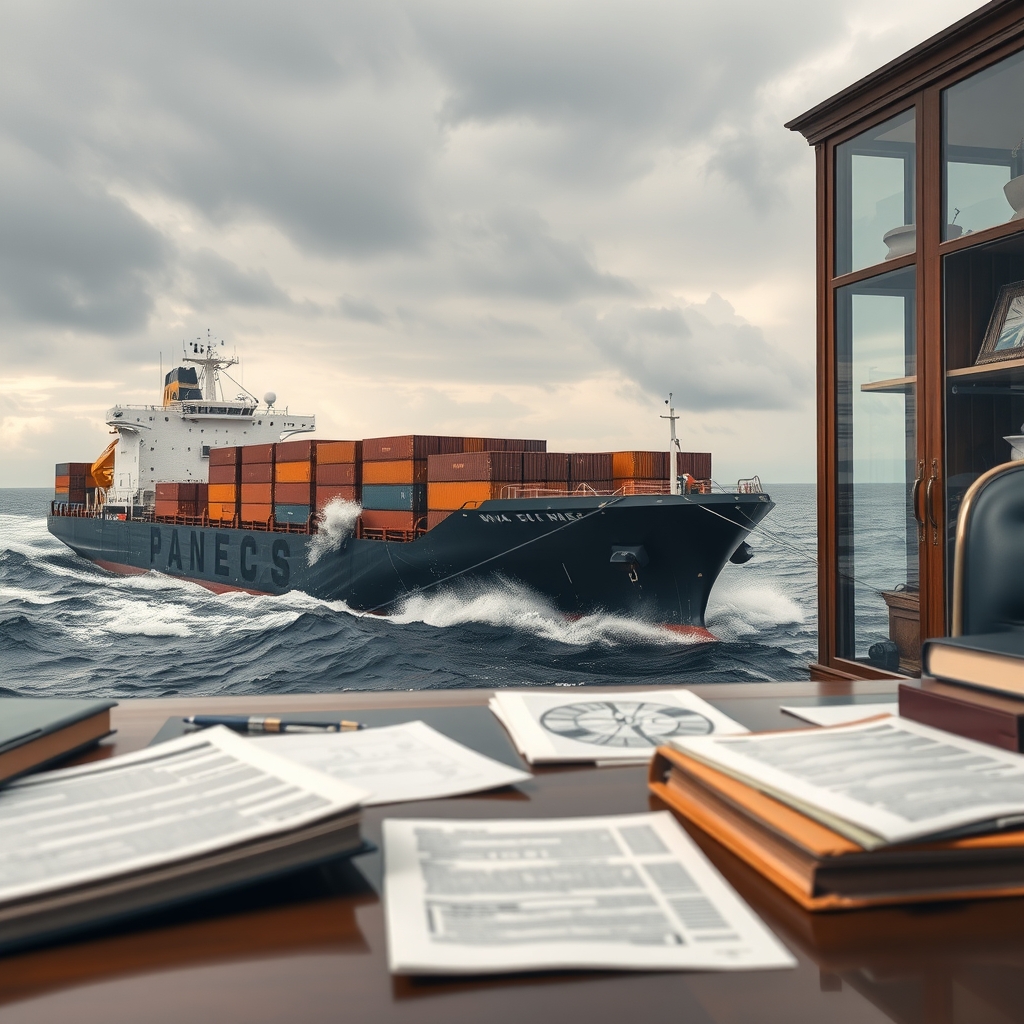
Maritime commerce has long operated as the lifeblood of international trade, carrying an overwhelming majority of global goods across treacherous oceans. Yet, the physical transit of cargo remains inherently vulnerable to marine perils, ranging from violent storms and piratical acts to unseaworthiness and shifting stowage. To mitigate these catastrophic financial risks, merchants, carriers, and underwriters developed the sophisticated legal and contractual architecture of marine cargo insurance. This system operates at the intersection of private contract law, international maritime conventions, and centuries of judicial precedent. Adjudicating cargo claims requires a rigorous understanding of policy construction, proximate cause doctrines, statutory liability regimes, and the allocation of risk among diverse maritime actors.
The historical evolution of cargo insurance transitioned from customary maritime loans and bilateral guarantees into standardized policy forms. Chief among these instruments are the Institute Cargo Clauses, promulgated by the International Underwriting Association and the London insurance market. These clauses—categorized primarily as Clauses A, B, and C—establish the baseline scope of coverage. Clause A provides an all-risks framework, covering all losses of or damage to the subject-matter insured except as expressly excluded. Conversely, Clauses B and C operate on a named-perils basis, enumerating specific catastrophic events such as fire, explosion, stranding, sinking, or washing overboard. Deciphering these clauses requires courts and practitioners to navigate complex evidentiary burdens, where the assured must initially establish a fortuitous loss during the currency of the policy, shifting the burden subsequently to the underwriter to prove the applicability of a specific exclusion, such as inherent vice, insufficient packing, or willful misconduct.
What is the legal scope of cargo insurance and how do international conventions apply?
The substantive scope of marine cargo insurance cannot be divorced from the broader statutory and conventional frameworks governing international carriage of goods by sea. International conventions such as the Hague Rules, the Hague-Visby Rules, the Hamburg Rules, and the Rotterdam Rules establish the baseline liabilities, immunities, and rights of ocean carriers. These regimes profoundly impact cargo claims because insurers, upon indemnifying the cargo owner, frequently exercise the doctrine of subrogation to pursue recovery against the negligent carrier.
Under the Hague-Visby Rules, carriers are subject to a due diligence obligation to make the vessel seaworthy before and at the beginning of the voyage, coupled with a duty to properly and carefully load, handle, stow, carry, keep, care for, and discharge the cargo carried. However, the Rules also provide carriers with an extensive list of structural immunities, most notably the defense of error in navigation or management of the ship. When cargo is damaged due to navigational negligence, the cargo owner cannot recover from the carrier, highlighting the indispensable role of marine cargo insurance. Without an all-risks cargo policy, the commercial risk of unrecoverable carrier negligence would paralyze international trade.
Moreover, international jurisprudence frequently grapples with the tension between contractual policy terms and mandatory statutory provisions. Arbitral tribunals and courts operating under the auspices of the International Chamber of Commerce and maritime arbitration associations must meticulously balance freedom of contract against public policy limits. The principle of utmost good faith, historically encapsulated in the doctrine of uberrimae fidei, remains a foundational pillar across major maritime jurisdictions. Under this doctrine, any material misrepresentation or non-disclosure by the assured at the inception of the contract entitles the underwriter to avoid the policy ab initio, a harsh remedy that underscores the high fiduciary standard expected in marine underwriting.
How are marine cargo claims adjudicated and what doctrines govern causation?
The adjudication of marine cargo claims pivots on the foundational causation doctrine known in English and international maritime law as *causa proxima non remota spectatur*—the proximate, not the remote, cause is to be looked at. Determining the proximate cause of a loss frequently tests the ingenuity of courts when multiple concurrent or successive causes contribute to cargo degradation. For instance, if a vessel encounters heavy weather that damages the hatch covers, allowing seawater to enter and spoil a cargo of grain, the proximate cause is clearly the sea peril. However, if the hatch covers were structurally defective prior to departure due to the carrier's failure to exercise due diligence, the analysis shifts toward unseaworthiness and contractual breach.
Jurisprudence from the International Court of Justice and specialized maritime tribunals emphasizes that causation must not be reduced to a simplistic mechanical test. Instead, judges and arbitrators examine the chain of causation through the lens of commercial common sense and the contractual intent of the parties. When evaluating cargo claims involving perishable goods, courts must also distinguish between inherent vice—the natural deterioration or decay of an item due to its own internal characteristics—and external fortuitous perils. Underwriters are generally exonerated from losses stemming solely from inherent vice unless an insured peril accelerated or aggravated the decay.
The claims process itself demands strict compliance with notice provisions, survey requirements, and documentation standards. Upon discovering damage, the cargo claimant must immediately invite the underwriter's surveyor to inspect the consignment, establish the quantum of loss, and mitigate further damage. Failure to take reasonable steps to mitigate loss can prejudice the recovery under both civil law and common law jurisdictions. Furthermore, the calculation of indemnity involves intricate accounting, distinguishing between total actual loss, constructive total loss, and particular average. General average declarations further complicate cargo claims, requiring cargo interests to contribute proportionately to sacrifices and expenditures incurred voluntarily for the common safety of the adventure.
Subrogation and Recovery Mechanisms
Once the cargo underwriter indemnifies the assured for a covered loss, the underwriter steps into the legal shoes of the cargo owner via subrogation. This mechanism enables the insurer to initiate legal or arbitral proceedings against third-party tortfeasors, including shipowners, charterers, terminal operators, and multimodal transport intermediaries. The efficacy of subrogation actions depends heavily on the jurisdiction-specific recognition of bills of lading terms, such as Himalaya clauses, which seek to extend carrier immunities and limitation of liability to independent contractors and stevedores.
Litigation involving subrogated cargo claims frequently crosses multiple judicial jurisdictions, giving rise to complex conflicts of law. Courts must determine whether the governing law of the sales contract, the bill of lading, the charterparty, or the insurance policy prevails. The inclusion of exclusive jurisdiction clauses and arbitration agreements in bills of lading adds another layer of procedural complexity, requiring national courts to decide whether to stay proceedings in favor of foreign arbitral forums.
What are the emerging legal challenges in modern marine cargo insurance?
Contemporary maritime commerce is undergoing a profound transformation driven by digitalization, containerization, and evolving supply chain structures. Traditional paper bills of lading are rapidly being supplanted by electronic bills of lading, governed by nascent legal frameworks such as the UNCITRAL Model Law on Electronic Transferable Records. These technological shifts introduce novel legal risks for cargo insurance and claims adjudication. For instance, cyber-attacks targeting port infrastructure, automated container terminals, or vessel navigation systems can cause widespread cargo delays, spoilage, or physical destruction. Underwriters and courts must adapt traditional marine insurance wordings—historically drafted for wooden sailing ships and physical perils—to address silent cyber risks, ransomware disruptions, and data tampering.
Moreover, the expansion of multimodal transport chains complicates the demarcation point where marine transit begins and ends. Cargo is frequently moved via a seamless combination of maritime vessels, rail, inland waterways, and heavy trucks. When cargo sustains damage during a multimodal journey, pinpointing the exact leg of transit where the loss occurred is essential for determining whether marine cargo clauses or domestic overland transit laws apply. Judicial authorities across maritime nations are increasingly called upon to interpret composite insurance policies that bridge disparate legal regimes, ensuring that commercial expectations are harmonized with statutory mandates.
Environmental regulations imposed by the International Maritime Organization, such as carbon intensity reduction measures and slow steaming mandates, also impact cargo transit times and potential spoilage risks for climate-sensitive goods. Insurers must carefully evaluate how extended voyage durations influence inherent vice exclusions and general average contributions. As international trade law continues to evolve in response to geopolitical shifts and technological innovation, the jurisprudence surrounding cargo insurance and marine claims will remain a dynamic and indispensable pillar of global economic stability.
Ultimately, the legal regime governing cargo insurance and marine claims achieves a delicate equilibrium between risk distribution and commercial predictability. Through the rigorous application of international conventions, well-settled doctrines of causation, and adaptive judicial interpretation, maritime law ensures that the inevitable perils of the sea do not destabilize international exchange. Practitioners, underwriters, and adjudicators must continually navigate these intricate legal currents, balancing historical precedent against the unprecedented demands of modern global logistics.
Comments
No comments yet.