The Jurisprudence of Biosecurity: Ballast Water Management and Maritime Liability
An analytical examination of the legal frameworks governing ballast water, focusing on the interplay between the BWM Convention, UNCLOS, and the complexities of maritime liability.
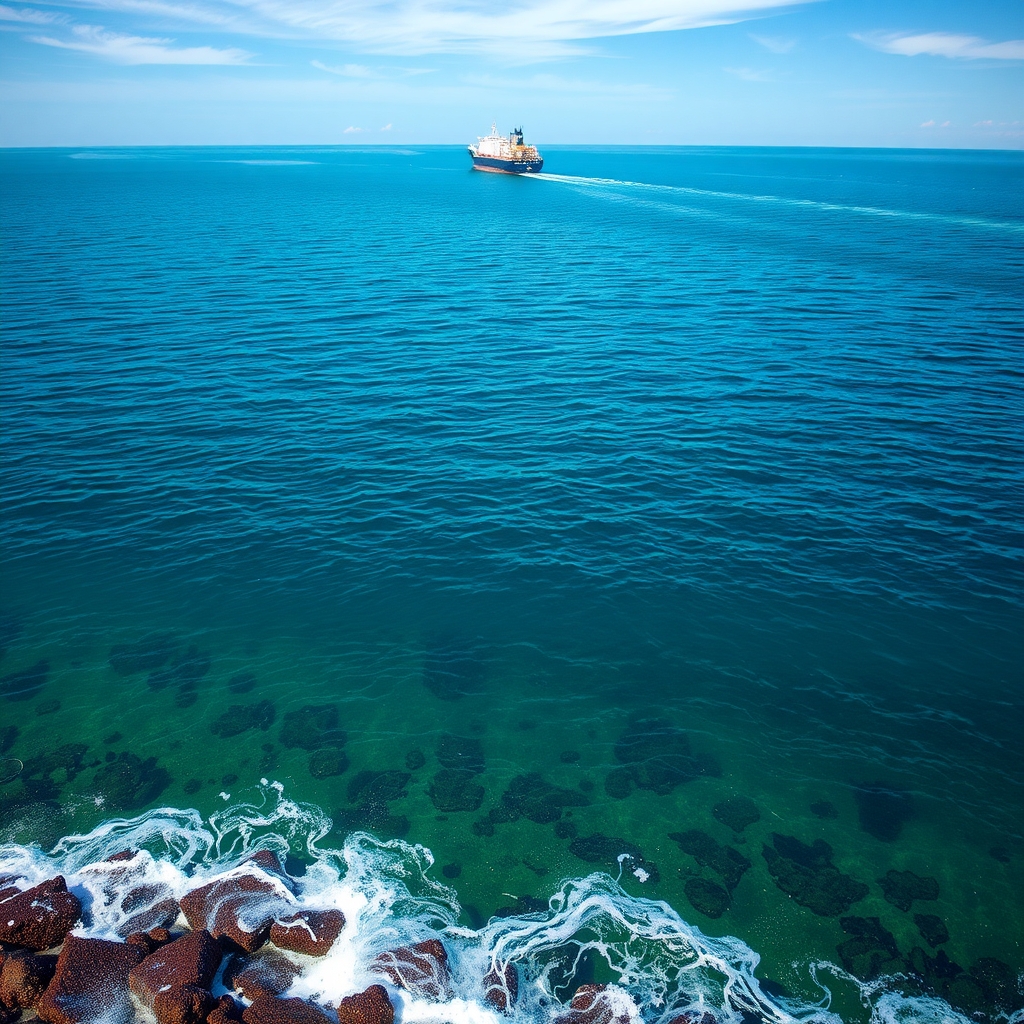
The global maritime industry, the lifeblood of international commerce, operates within a delicate equilibrium between the necessity of unfettered navigation and the imperative of ecological preservation. Among the most insidious threats to marine biodiversity is the inadvertent transfer of invasive aquatic species (IAS) through the discharge of ballast water. Unlike the visible and immediate devastation of an oil spill, the introduction of non-indigenous species represents a slow-motion ecological catastrophe, one that fundamentally reconfigures coastal ecosystems, destroys local fisheries, and imposes staggering economic costs. From a legal perspective, this phenomenon challenges the traditional boundaries of maritime liability, as the mechanisms for attributing causation and quantifying biological harm remain significantly underdeveloped compared to the regimes governing chemical or petroleum pollution.
The Regulatory Architecture: The IMO BWM Convention
The primary instrument governing this sector is the International Maritime Organization's (IMO) International Convention for the Control and Management of Ships' Ballast Water and Sediments (the BWM Convention), which entered into force in 2017. The Convention represents a shift from voluntary guidelines to a mandatory regulatory regime designed to mitigate the risks posed by the uptake and discharge of ballast water. The core of the Convention lies in its tiered approach to management standards, which distinguishes between operational methods and technical requirements.
The Convention establishes two primary standards for ballast water management:
- The D-1 Standard: This standard requires ships to manage their ballast water through exchange operations, typically conducted in open ocean waters where the salinity and temperature differ significantly from coastal environments, thereby increasing the mortality rates of many coastal species.
- The D-2 Standard: This is a more stringent requirement involving the use of an approved Ballast Water Management System (BWMS). These systems employ physical, chemical, or biological processes—such as UV irradiation, filtration, or electro-chlorination—to ensure that the concentration of viable organisms in the discharged water remains below specific, scientifically determined thresholds.
| Standard | Methodology | Primary Objective | Technical Complexity |
|---|---|---|---|
| D-1 (Ballast Water Exchange) | Dilution and flushing in deep sea | Minimize density/temperature-sensitive species | Moderate; relies on operational procedure |
| D-2 (Ballast Water Performance) | On-board treatment technology | Eliminate or neutralize organisms via technology | High; requires certified hardware and maintenance |
While the BWM Convention provides a robust technical framework, its efficacy is inherently tied to the enforcement capabilities of Flag States and Port States. The legal complexity arises when the technical standards are met, yet an invasive species is still introduced, or when the failure to meet these standards leads to transboundary environmental harm.
How is ballast water liability determined?
In traditional maritime law, liability for pollution is often clearly delineated through specialized conventions, such as the International Convention on Civil Liability for Oil Pollution Damage (CLC). These regimes typically utilize a strict liability model for shipowners, ensuring that victims of oil pollution can seek compensation without the arduous task of proving negligence. However, the jurisprudential landscape for ballast water is markedly different, characterized by a profound difficulty in establishing the requisite causal link between a specific vessel's discharge and a specific ecological event.
The determination of liability in the context of IAS faces three primary legal hurdles: the problem of causation, the difficulty of quantification, and the ambiguity of the standard of care. To hold a shipowner liable for the introduction of an invasive species, a claimant must demonstrate that the species in question was indeed contained within the vessel's ballast water and that the discharge from that specific vessel was the proximate cause of the ecological damage. Given the vastness of the oceans and the constant movement of thousands of vessels, isolating a single biological actor becomes a forensic impossibility in many instances.
Furthermore, the "polluter pays" principle, a cornerstone of modern environmental law, struggles to find its footing when the damage is diffuse and cumulative. Unlike a localized oil slick, the impact of an invasive species like the zebra mussel or the North American comb jelly manifests over years or decades. This latency period complicates the legal assessment of temporal causation. If a state seeks to claim damages for the degradation of its marine resources, should the liability rest on the shipowner who discharged the water, or on the state that failed to enforce the BWM Convention standards?
"The difficulty of establishing a direct causal link between the discharge of ballast water and the subsequent ecological transformation of a coastal zone represents one of the most significant gaps in contemporary maritime environmental law."
Current legal doctrines oscillate between a fault-based approach—where liability is contingent upon proving a failure to exercise due diligence—and a move toward strict liability. If a vessel adheres to the D-2 standard but an invasive species survives the treatment process due to unforeseen biological resistance, does the shipowner remain liable? Under a strict liability regime, the answer would be yes; however, under a due diligence framework, such an occurrence might be considered an unavoidable accident, thereby exonerating the carrier.
How does port state control regulate ballast water?
The enforcement of the BWM Convention relies heavily on Port State Control (PSC). While Flag States have the primary responsibility for ensuring that vessels flying their flag comply with international standards, it is the Port States that possess the practical authority to inspect vessels and prevent the entry of biological threats into their sovereign waters. This creates a dynamic tension between the right of innocent passage under the United Nations Convention on the Law of the Sea (UNCLOS) and the sovereign right of a state to protect its marine environment.
Under UNCLOS, specifically Articles 192 and 194, states have a fundamental obligation to protect and preserve the marine environment. Article 211 further empowers states to adopt laws and regulations for the prevention, reduction, and control of pollution from vessels, provided they do not hamper the freedom of navigation. In practice, Port State Control officers conduct inspections to verify the presence of an approved Ballast Water Management Plan, the International Ballast Water Management Certificate, and the accuracy of the vessel's Ballast Water Record Book. They may also perform sampling and testing of the ballast water to ensure compliance with the D-2 performance standard.
However, the regulatory authority of the Port State is not absolute. The jurisprudence surrounding the limits of PSC enforcement is characterized by the principle of proportionality. A Port State cannot impose requirements that are more stringent than the BWM Convention without a scientifically substantiated reason that pertains to its specific environmental risks. This has led to frequent diplomatic and legal frictions when states attempt to implement unilateral, more rigorous biosecurity protocols that conflict with the standardized IMO framework.
Moreover, the enforcement mechanism faces significant practical challenges. Sampling ballast water is not an instantaneous process; it requires specialized equipment and laboratory analysis, often making it impossible to conduct a thorough check during a standard port call. This leads to a reliance on documentation and periodic, rather than continuous, monitoring, creating potential loopholes for non-compliant vessels to exploit.
The Interplay between UNCLOS and the BWM Convention
The relationship between UNCLOS and the BWM Convention is one of hierarchical integration. UNCLOS serves as the "Constitution for the Oceans," providing the broad legal principles and jurisdictional frameworks, while the BWM Convention acts as a specialized technical instrument that fulfills the obligations set forth in UNCLOS. The obligation of states to prevent marine pollution (Art 194) is the normative foundation upon which the BWM Convention is built.
This integration is particularly evident in the discussion of state responsibility. If a Flag State fails to implement effective oversight of its vessels, thereby allowing them to bypass BWM requirements, that state may be held responsible under international law for a breach of its due diligence obligations. This concept of due diligence was notably explored in the context of other maritime activities by the International Tribunal for the Law of the Sea (ITLOS), where the tribunal emphasized that the duty to protect the environment is an obligation of conduct, not an obligation of result. A state is not necessarily liable because an accident occurred, but it is liable if it failed to take all necessary and appropriate measures to prevent it.
This distinction is critical for the BWM regime. It implies that the legal focus should perhaps shift from seeking individual culpability for every biological introduction toward ensuring that both Flag and Port States maintain a rigorous, systemic framework of prevention and monitoring. The failure to maintain this system constitutes the primary legal breach.
Comparative Models of Maritime Environmental Liability
To understand the unique position of ballast water liability, one must compare it to the established regimes for other forms of maritime pollution. The following table illustrates the divergence in legal approaches:
| Feature | Oil Pollution (CLC/Fund) | Ballast Water (BWM/UNCLOS) |
|---|---|---|
| Primary Liability Model | Strict Liability (Shipowner) | Primarily Fault-based / Due Diligence |
| Causation Requirement | Direct and measurable (Physical spill) | Indirect and diffuse (Biological introduction) |
| Damage Quantification | Relatively straightforward (Cleanup/Property) | Extremely complex (Ecological/Long-term) |
| Central Regulatory Body | IMO (CLC) | IMO (BWM) / UNCLOS (Framework) |
| Compensation Mechanism | Established Funds (IOPC Funds) | No dedicated compensation fund for IAS |
The absence of a dedicated compensation fund for biological pollution is perhaps the most glaring deficiency in the current international legal order. While the oil industry has a well-funded system to handle catastrophic spills, the ecological damage caused by invasive species is often uncompensated, leaving the financial burden to be borne by local governments, fishers, and coastal communities.
Conclusion: Toward a Unified Regime for Marine Biosecurity
The legal challenges posed by ballast water management represent a frontier in maritime law, where the traditional paradigms of property rights and freedom of navigation collide with the modern requirements of planetary stewardship. The current framework, while technically sophisticated through the BWM Convention, remains legally fragmented. The difficulty in establishing causation and the lack of a robust compensatory mechanism for ecological harm create a significant gap between the regulation of the act and the adjudication of its consequences.
Moving forward, the international community must consider the development of a specialized liability regime that addresses the unique characteristics of biological pollution. Such a regime might move away from the pursuit of individual vessel culpability and instead focus on a systemic approach to risk management and ecological remediation. This would likely involve the creation of an international fund, similar to those used for oil pollution, supported by levies on maritime trade, to provide a buffer against the unpredictable and long-term damages caused by invasive species. Ultimately, the goal must be to transition from a reactive legal stance to a proactive, precautionary framework that recognizes the ocean's biological integrity as a vital component of the global commons.
Comments
No comments yet.