Artificial Intelligence in Maritime Navigation: Jurisprudential Boundaries and Liability Regimes
An analysis of maritime liability frameworks, UNCLOS compliance, COLREGs, and product liability in an era of AI-driven navigation.
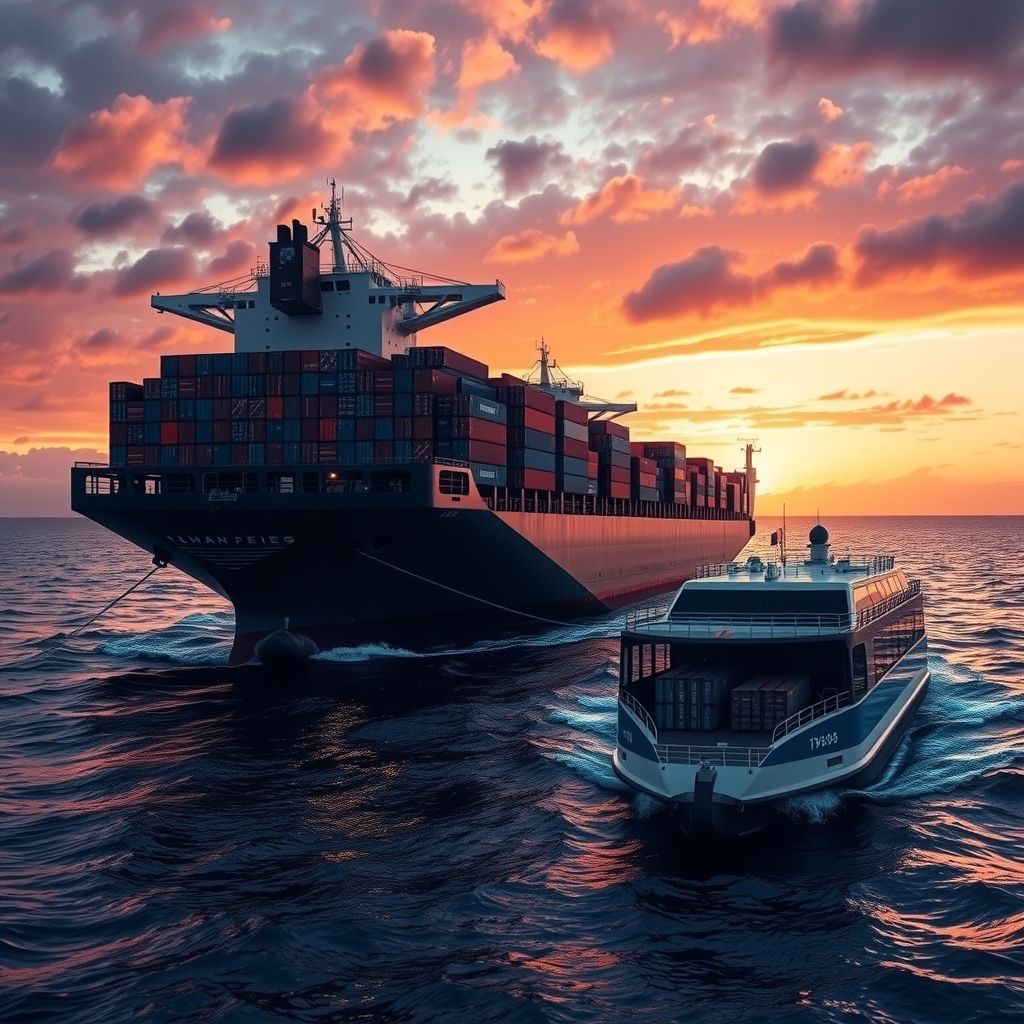
The integration of artificial intelligence and machine learning into vessel navigation systems represents a profound shift in maritime law. For centuries, international maritime jurisprudence has operated on the foundational premise that navigation is a uniquely human endeavor executed by sea captains, watchkeeping officers, and crew members whose professional judgment is bound by customary seamanship, statutory obligations, and equitable liability doctrines. The deployment of Maritime Autonomous Surface Ships, incorporating deep neural networks, computer vision, and sensor fusion algorithms, challenges these traditional assumptions.
As maritime transport transitions from human-managed bridge procedures to algorithmically guided systems, international tribunals and national admiralty courts face complex legal questions. Existing legal structures, built around flag State jurisdiction, fault-based collision liability, and carrier immunity for nautical fault, were designed for human-operated vessels. Reconciling autonomous systems with key treaties—such as the United Nations Convention on the Law of the Sea, the International Regulations for Preventing Collisions at Sea, and the Hague-Visby Rules—requires a detailed re-examination of legal personality, seaworthiness, and causation in admiralty law.
1. The Jurisprudential Status of Maritime AI and Flag State Duties under UNCLOS
The primary legal framework governing ocean space is the United Nations Convention on the Law of the Sea, concluded at Montego Bay in 1982. Under Article 91 of UNCLOS, every State must fix the conditions for the grant of its nationality to ships, for the registration of ships in its territory, and for the right to fly its flag. This principle, reinforced by the International Court of Justice in the Nottebohm Case (1955) regarding effective linkage, creates a jurisdictional connection between the flag State and the vessel. However, Article 94 articulates the specific obligations of the flag State to exercise effective jurisdiction and control in administrative, technical, and social matters over ships flying its flag.
Under Article 94(3)(b) and Article 94(4)(b) of UNCLOS, the flag State is required to ensure that each ship is in the charge of a master and officers who possess appropriate qualifications, particularly in seamanship, navigation, communications, and marine engineering. The explicit textual insistence on a human master and crew forms a legal anchor within international law. This structure assumes that operational authority on board is held by a natural person capable of exercising professional discretion and accepting legal obligations.
In the jurisprudence of the International Tribunal for the Law of the Sea, notably in the M/V Virginia G (Panama v. Guinea, 2014) and the M/V Louisa (Saint Vincent and the Grenadines v. Spain, 2012), the duties of flag States are defined as obligations of due diligence. A flag State must establish a comprehensive domestic legal framework to enforce international standards and exercise effective oversight over vessels on its register. When an artificial intelligence system operates a vessel without a human master on board, the flag State faces potential international responsibility under the rules codified in the International Law Commission Draft Articles on Responsibility of States for Internationally Wrongful Acts (2001). If a flag State permits the unmonitored deployment of an autonomous vessel that fails to comply with international safety standards, it may breach its due diligence obligations under Article 94, triggering state responsibility for resulting marine casualties or pollution incidents in international waters.
Can an algorithm fulfill the legal definition of a ship captain?
To determine whether an artificial intelligence system can legally fulfill the duties of a master, one must examine both statutory definitions and international conventions. The International Convention on Standards of Training, Certification and Watchkeeping for Seafarers (STCW), 1978, as amended, defines the master as the person having command of a ship. The use of the word person within STCW, as well as in parallel provisions of the International Safety Management Code and national maritime statutes, refers to a natural person possessing legal capacity.
Under public international law, algorithmic systems lack legal personality. They cannot hold rights, bear statutory duties, or be subject to criminal or administrative prosecution. While corporate law has long recognized juristic persons, admiralty courts have consistently limited the role of the master to natural persons due to the discretionary duties and moral agency required in command decisions at sea. In cases such as The Scotia (1871) and The Wanaka (1998), courts underscored that a master\'s duties involve both technical competence and qualitative, context-dependent judgments under pressure, especially regarding life safety and salvage obligations under Article 98 of UNCLOS.
An algorithm cannot satisfy the legal definition of a master under current international conventions. Algorithmic systems operate through probabilistic models and data-driven rule matching; they do not possess moral agency, professional accountability, or legal status. Consequently, even in fully autonomous operations, the legal obligations of the master do not transfer to the software. Instead, those obligations remain with human entities—such as the remote control center operator, the designated shore-based master, or the vessel owner—who remain legally accountable for operational decisions made by automated systems.
How does artificial intelligence impact liability under COLREGs?
The International Regulations for Preventing Collisions at Sea 1972 establish universal navigational rules aimed at preventing collisions between vessels. Applying COLREGs to autonomous vessels equipped with AI creates significant interpretative challenges, particularly regarding Rules 2, 5, and 8.
Rule 5 of COLREGs requires every vessel to maintain a proper lookout by sight and hearing as well as by all available means appropriate in the prevailing circumstances and conditions, so as to make a full appraisal of the risk of collision. Historical admiralty jurisprudence, such as The Sandra Lee (1949) and The Corfu Channel Case (ICJ, 1949), interpreted lookout duties as personal obligations carried out by human senses on the bridge. The phrase all available means was expanded over time to include radar, ARPA, and electronic chart systems, but always as support tools for human watchkeeping officers.
If an AI navigation system uses sensor fusion combining optical cameras, infrared sensors, LiDAR, and synthetic aperture radar, it may exceed human perceptual range across diverse atmospheric conditions. However, the legal issue centers on whether machine sensing satisfies the statutory requirement of sight and hearing. In legal actions following collisions, courts must evaluate whether sensor data processing constitutes a proper lookout or merely an automated data feed. If a software system misinterprets sensor input due to edge-case environmental phenomena—such as unusual refraction or wave clutter—the absence of human contextual analysis may lead to a finding that Rule 5 was breached.
Rule 2 of COLREGs, known as the General Prudential Rule, contains the safety valve provisions of international navigation legal architecture. Rule 2(a) provides that nothing in the rules shall exonerate any vessel, or the owner, master, or crew thereof, from the consequences of any neglect to comply with these rules or of the neglect of any precaution which may be required by the ordinary practice of seamen. Rule 2(b) further mandates due regard to all dangers of navigation and collision and to any special circumstances, including the limitations of the vessels involved, which may render a departure from the rules necessary to avoid immediate danger.
Rule 2 requires qualitative human discretion—the ability to evaluate when statutory navigation rules must be departed from to prevent an accident. AI models trained on standard operational datasets often struggle to identify novel edge cases that require intuitive departures from standard procedures. If an automated system strictly adheres to give-way rules under Rules 14 or 15 when special circumstances require an immediate deviation under Rule 2(b), the failure of the system to depart from standard operating rules may establish civil fault under general maritime negligence principles.
Who is liable when an autonomous ship causes a collision at sea?
Determining liability in collisions involving AI-guided vessels requires applying the International Convention for the Unification of Certain Rules of Law with Respect to Collisions Between Vessels (1910 Collision Convention) and domestic maritime tort law. Under Article 2 of the 1910 Convention, if a collision is caused by chance, or is due to force majeure, or if the causes of the collision cannot be determined, the damages are borne by those who have suffered them. Under Article 3, if the collision is caused by the fault of one of the vessels, liability to make good the damages attaches to that vessel. Article 4 establishes proportional liability where two or more vessels are at fault.
The core issue in autonomous vessel collisions is identifying where legal fault resides when a collision stems from an algorithmic decision rather than human operational error on the bridge. In traditional admiralty cases, such as The Louisiana (1866) and The Corning (1872), courts applied rebuttable presumptions of fault against moving vessels that collided with stationary objects or vessels at anchor, placing the burden of proof on the moving vessel to show sole cause, fault of the other vessel, or inevitable accident.
When an AI system operates an autonomous vessel, assigning fault involves a complex analysis of operational control, system training, software integrity, and human oversight. The spectrum of potential liable parties includes:
- The Shipowner or Operator: Liable under vicarious liability doctrines and direct duties to ensure a seaworthy vessel, properly configured software, and clear operational parameters for shore-based controllers.
- The Shore-Based Remote Operator: Liable under ordinary negligence principles if they fail to intervene when system warnings flag an operational anomaly or when environmental conditions exceed the operational envelope of the automated system.
- The AI System Developer or Software Vendor: Subject to product liability claims or contractual indemnity actions if the navigational failure resulted from code defects, flawed training datasets, or unaddressed algorithmic failure modes.
- The Classification Society: Potentially liable in limited circumstances if it negligently certified an autonomous control architecture that failed to satisfy statutory safety standards.
In fault-based collision litigation, courts apply proportional fault principles. If a human watchkeeper on a conventional vessel fails to maintain a proper lookout under Rule 5, while an autonomous vessel\'s AI system miscalculates target aspect under Rule 14 due to a software flaw, the court must apportion damages under Article 4 of the 1910 Collision Convention. This apportionment relies on evaluating the relative contribution of human negligence versus algorithmic error to the risk of collision.
How does maritime product liability apply to autonomous navigation systems?
The transition from human operational decisions to software automation shifts the locus of maritime liability from traditional operational fault toward product liability frameworks. In traditional admiralty jurisprudence, product liability claims against marine equipment manufacturers are governed by maritime tort principles, as affirmed in landmark decisions such as East River Steamship Corp. v. Transamerica Delaval Inc. (1986) by the Supreme Court of the United States.
Under the East River doctrine, a commercial buyer of a product cannot recover in tort under strict product liability or negligence theories when a defect in the product causes purely economic loss—meaning damage to the product itself. Recovery for purely economic losses must be pursued through contract and warranty claims under maritime commercial law. However, when a defect in an AI navigation system leads to a collision that causes personal injury, loss of life, or physical damage to third-party property or other vessels, strict product liability and tort negligence theories apply fully in admiralty jurisdiction.
Applying product liability to maritime AI systems introduces three core categories of product defect:
- Design Defects: Occurring when the foundational architecture of the AI system, such as its underlying decision-tree logic or neural network training regimen, fails to account for established operational hazards or statutory compliance rules under COLREGs.
- Manufacturing or Deployment Defects: Occurring when a specific software build contains corrupted code, incorrect sensor calibration tables, or integration faults during installation on the vessel\'s bridge network.
- Failure to Warn or Instruct: Arising when the software developer fails to adequately inform shipowners and remote operators about operational limits, known system blind spots, hardware constraints, or conditions that require human intervention.
A central legal challenge in AI product liability litigation is the black box problem inherent in deep learning systems. Unlike deterministic software, where code paths can be re-traced line by line, advanced machine learning models construct non-linear, multi-dimensional statistical correlations that make it difficult to explain why a system reached a specific decision. Plaintiffs seeking to prove a design defect face complex evidentiary hurdles in demonstrating that a reasonable alternative design existed, or that the system failed to perform as safely as an ordinary maritime operator would expect.
Furthermore, maritime product liability interacts with the non-delegable duty of the shipowner to provide a seaworthy vessel. Under the doctrine established in The Muncaster Castle (1961), a shipowner\'s obligation to exercise due diligence to make the vessel seaworthy cannot be delegated to third-party contractors or equipment manufacturers. If an AI system fails due to a latent software bug, the shipowner may remain primary liable to cargo interests or third-party vessel owners, leaving the shipowner to seek indemnification through complex secondary product liability litigation against software vendors.
2. Limitation of Liability and Seaworthiness under Hague-Visby and Rotterdam Rules
The carriage of goods by sea is governed by statutory liability regimes that balance the interests of ocean carriers and cargo owners. The International Convention for the Unification of Certain Rules of Law Relating to Bills of Lading (Hague Rules 1924), as amended by the Visby Protocol (Hague-Visby Rules 1968), forms the statutory backbone of ocean bills of lading globally. The framework places primary duties on the carrier while offering statutory immunities.
Under Article III, Rule 1 of the Hague-Visby Rules, the carrier is bound, before and at the beginning of the voyage, to exercise due diligence to:
- Make the ship seaworthy;
- Properly man, equip, and supply the ship;
- Make the holds, refrigerating and cool chambers, and all other parts of the ship in which goods are carried, fit and safe for their reception, carriage, and preservation.
Seaworthiness is a dynamic legal concept. As established in FC Bradley & Sons v. Federal Steam Navigation Co (1927) and reaffirmed in The Eurasian Dream (2002), seaworthiness requires that a vessel have the degree of fitness, in structural integrity, equipment, crew competence, and operational readiness, that an ordinarily prudent shipowner would require for the intended voyage. In an automated vessel, seaworthiness extends to the reliability, cyber-security, and operational fitness of the navigation software and automated decision systems.
If a vessel sails with outdated software, unpatched security vulnerabilities, or an AI model unsuited for expected seasonal weather patterns, the vessel may be held unseaworthy at the commencement of the voyage. If this condition causes cargo damage or loss, the carrier will be deprived of statutory liability defenses unless it can demonstrate that it exercised due diligence to make the vessel seaworthy.
The transition to AI navigation also affects the statutory exemptions long relied upon by ocean carriers under Article IV, Rule 2(a) of the Hague-Visby Rules. Article IV(2)(a) provides that neither the carrier nor the ship shall be responsible for loss or damage arising or resulting from act, neglect, or default of the master, mariner, pilot, or the servants of the carrier in the navigation or in the management of the ship. This nautical fault defense has historically protected shipowners from liability when cargo damage resulted from negligent navigation by human watchkeepers.
With autonomous surface ships, the applicability of the nautical fault defense diminishes or disappears:
- If a vessel operates without a onboard human master or crew, an operational error made by an AI navigation engine cannot be characterized as the act, neglect, or default of the master or servants of the carrier. Software code is an asset of the ship, not a servant.
- If the navigation failure stems from an algorithmic fault present before the vessel set sail, the loss is legally attributable to a breach of the carrier\'s non-delegable duty to exercise due diligence to ensure initial seaworthiness under Article III, Rule 1, rather than a operational error during the voyage.
- If a shore-based operator causes a collision through negligent monitoring, debate centers on whether the operator qualifies as a servant of the carrier in the management of the ship, or if their remote role places their actions under general operational management, which falls outside the scope of traditional Article IV(2)(a) protections.
The United Nations Convention on Contracts for the International Carriage of Goods Wholly or Partly by Sea (Rotterdam Rules 2008) reflects this shifting landscape. The Rotterdam Rules eliminate the nautical fault defense entirely under Article 17, placing liability on the carrier if the claimant proves that loss, damage, or delay was caused by the fault of the carrier or its representatives. Furthermore, Article 14 of the Rotterdam Rules extends the carrier\'s duty to exercise due diligence to make the ship seaworthy throughout the entire voyage, rather than limiting it to the period before and at the beginning of the voyage. Under this ongoing duty, a shipowner using AI systems must continuously maintain cyber-security protections, software updates, and operational fitness while at sea.
3. Comparative Jurisprudential Frameworks for AI Navigation
To analyze the legal responsibilities associated with varying levels of automation at sea, maritime operations can be evaluated across four distinct categories. These categories span from conventional human control to fully autonomous operations, highlighting the shifting balance between statutory conventions, product liability laws, and liability standards.
| Automation Level & Mode | UNCLOS & STCW Compliance Focus | COLREGs Compliance Duty Holder | Primary Liability Mechanics | Hague-Visby Seaworthiness Standard |
|---|---|---|---|---|
| Level 1: Human Commanded with AI Support (Automated decision support, manual execution) |
Full compliance via onboard licensed Master and watchkeeping crew under STCW 1978. | Onboard Master and Officers of the Watch retain direct, non-delegable statutory duty. | Fault-based tort liability against vessel owner; vicarious liability for crew negligence. | Standard due diligence regarding crew competence and mechanical/electronic seaworthiness. |
| Level 2: Remote Operations (Shore-controlled, human in the loop) |
Requires designated Shore Master; flag State must authorize remote command frameworks. | Remote Control Center Operator designated as functional Master under statutory rules. | Shared liability between shipowner, remote operator, and communications link provider. | Duty extends to latency, cyber security, and network integrity of telemetry systems. |
| Level 3: Constrained Autonomy (AI operates, human monitors on exception) |
Substantial regulatory tension with UNCLOS Art 94(4)(b) requiring certified onboard crew. | Delegated to AI system runtime logic; legal fallback to monitoring supervisor. | Complex allocation: proportional split between shipowner fault and software defect claims. | High standard of due diligence required for algorithmic reliability and system training. |
| Level 4: Fully Autonomous (Fully self-directed AI, no human intervention) |
Incompatible with UNCLOS Art 94; requires amendment or bilateral flag State waivers. | Attributed directly to Shipowner via strict liability or system design standards. | Primary transition to product liability, strict shipowner liability, and manufacturer recourse. | Absolute continuous duty regarding algorithm safety, machine learning model integrity, and cyber resilience. |
This comparative framework illustrates how advancing automation shifts legal risk away from traditional operational fault defenses toward strict liability models and product design accountability. As vessels progress from decision-support environments to fully self-directed autonomy, fault analyses depend less on real-time bridge decisions and more on the systemic reliability of the underlying software architectures.
4. Limitation of Liability Frameworks under the LLMC and Cyber Risk Management
A crucial protection for maritime commerce is the right of shipowners to limit their financial liability for maritime claims. The Convention on Limitation of Liability for Maritime Claims 1976, as amended by the 1996 Protocol (LLMC Convention), permits shipowners and salvors to limit their liability for claims arising from loss of life, personal injury, and property damage according to fixed calculation scales based on vessel tonnage.
Under Article 4 of the LLMC Convention, a person liable lose the right to limit liability only if it is proved that the loss resulted from their personal act or omission, committed with the intent to cause such loss, or recklessly and with knowledge that such loss would probably result. This conduct barring limitation standard creates a high threshold for claimants seeking to break a shipowner\'s right to limit liability.
In traditional admiralty litigation, such as The Marion (1984) and The Ocean Crown (2009), courts evaluated whether corporate management exercised adequate oversight over onboard operations, navigational charts, and safety management procedures. If a shipowner allowed a vessel to sail with outdated charts or an incompetent crew, and this failure reflected management-level neglect, the shipowner risked losing the right to limit liability.
In the context of AI-driven navigation, the LLMC framework faces novel legal challenges regarding the definition of personal act or omission and the threshold of recklessness:
- Algorithmic Knowledge and Corporate Privity: If an AI navigation system encounters systematic failure modes during sea trials, and the shipowner\'s technical management deploys the software without resolving these issues, deploying the vessel may be characterized as a reckless corporate act committed with constructive knowledge of probable harm.
- Cyber Security Vulnerabilities: Deploying an autonomous vessel with known, unpatched cyber security vulnerabilities that allow unauthorized third parties to override navigation systems could constitute reckless conduct under Article 4, potentially breaking the shipowner\'s right to limit liability.
- Inadequate Oversight of Autonomous Operations: If a shipowner reduces shore monitoring staff to cut costs, leaving remote operators unable to safely track automated vessels in high-density traffic zones, a resulting collision caused by operator fatigue may be viewed as a reckless management decision that bars liability limitation.
Furthermore, maritime insurers and Protection and Indemnity (P&I) Clubs operate under rulebooks that require shipowners to maintain vessels in a seaworthy condition and comply with classification society guidelines and statutory regulations. If an autonomous vessel causes severe marine casualty losses while operating outside certified operational parameters, marine insurers may deny coverage based on willful misconduct or non-compliance with classification rules, exposing the shipowner to unhedged direct liability.
Synthesizing the Future Architecture of Maritime AI Jurisprudential Regimes
Integrating artificial intelligence into maritime navigation requires a deliberate reconstruction of international maritime legal frameworks. The traditional legal structure—built on flag State jurisdiction, human seamanship, fault-based collision liabilities, and carrier protections for nautical fault—cannot easily absorb fully autonomous decision-making systems without structural adaptations.
Addressing these legal friction points requires targeted reforms across international law institutions:
- Amendments to Flag State Standards under UNCLOS: The International Maritime Organization and UNCLOS State Parties must develop formal interpretative agreements regarding Article 94, clarifying how flag States can certify autonomous control systems while satisfying their international due diligence obligations.
- Evolution of the IMO MASS Code: The non-mandatory Maritime Autonomous Surface Ships (MASS) Code must transition into a binding international instrument across SOLAS, STCW, and COLREGs. This code must establish clear definitions for shore-based masters, mandate fail-safe software protocols, and harmonize sensor fusion performance standards with Rule 5 requirements.
- Modernization of Liability Conventions: International maritime liability regimes must adapt to the shift from human operational error to software defect risks. This transition can be supported by adopting strict liability models for high-level autonomous vessels, paired with mandatory third-party insurance frameworks and direct recourse mechanisms against software manufacturers.
As ocean shipping adopts increasingly sophisticated automation, maritime legal regimes must balance technological innovation with marine safety, environmental protection, and legal certainty. By updating international conventions and adapting traditional admiralty principles, maritime jurisprudence can accommodate algorithmic seamanship while upholding accountability across global ocean commerce.
Comments
No comments yet.