Navigating the Post-Carbon Wake: Alternative Fuels and the Jurisprudential Fractures of Maritime Law
This paper analyzes the legal challenges surrounding alternative marine fuels, from the Bunker Convention gap and seaworthiness disputes to ITLOS climate jurisprudence.
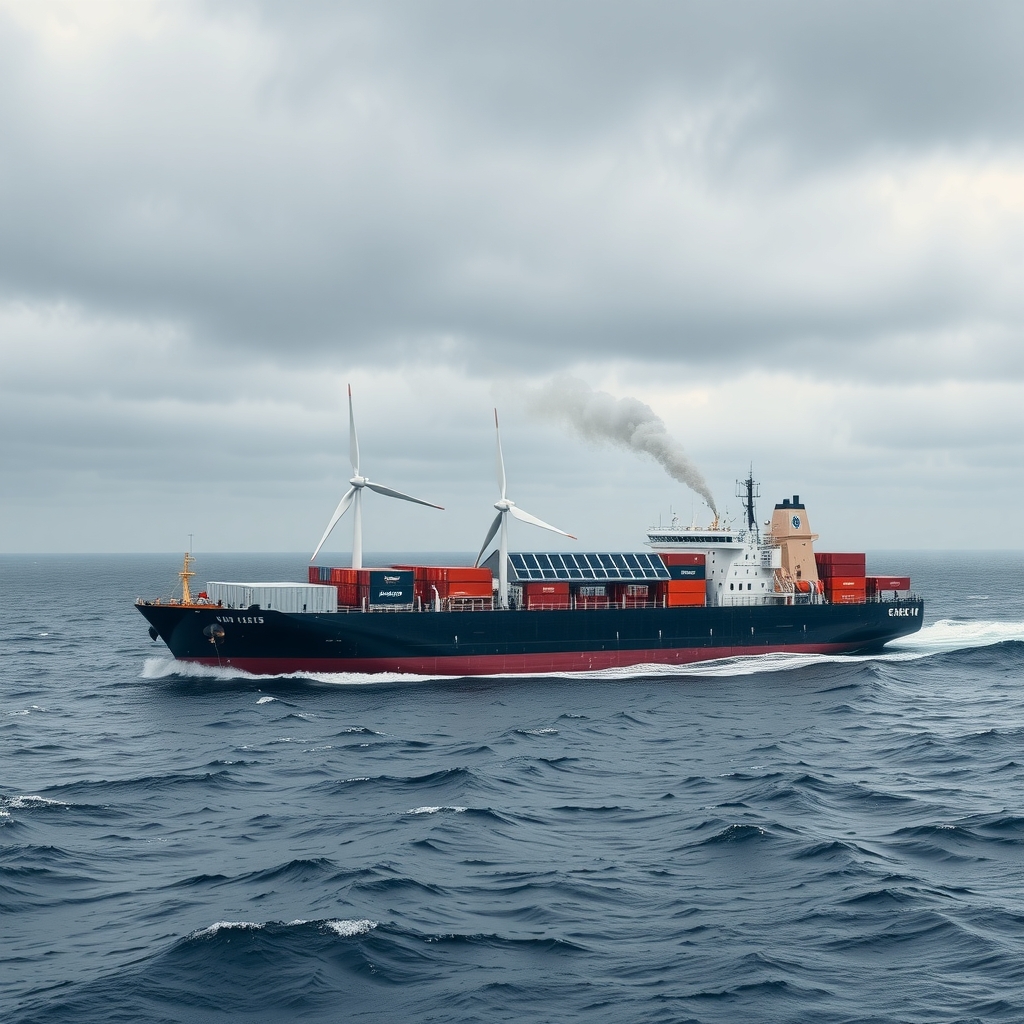
The imperative to decarbonize global commercial shipping has driven the international maritime sector into an unprecedented technological transformation. Propelled by the Revised Greenhouse Gas Strategy of the International Maritime Organization, which targets net-zero greenhouse gas emissions by or around 2050, as well as regional command-and-control architectures such as the European Union Emissions Trading System and the FuelEU Maritime Regulation, shipowners and charterers are systematically abandoning heavy fuel oil. In its place, the sector is adopting alternative energy vectors: liquefied natural gas, biomethanol, e-methanol, anhydrous ammonia, cryogenic hydrogen, and battery-electric propulsion. Yet, while engineering advancements continue to demonstrate the viability of these low- and zero-carbon fuels, the international legal superstructure governing merchant shipping remains structurally anchored in the mid-twentieth-century hydrocarbon paradigm.
This dissonance creates profound doctrinal tensions across public international maritime law, international environmental conventions, domestic regulatory regimes, and private commercial maritime contracts. International conventions designed to allocate risk, assign strict liability for bunker spills, preserve maritime safety, and establish standards of vessel seaworthiness were drafted on the presumption that marine fuels are persistent, liquid hydrocarbon mineral oils possessing flashpoints at or above 60 degrees Celsius. The introduction of cryogenic, low-flashpoint, highly toxic, and chemically volatile substances shatters this foundational premise. This paper provides a doctrinal and comparative analysis of the legal fractures emerging from the maritime energy transition, evaluating the tensions between decarbonization mandates and traditional principles of admiralty and international law.
The Regulatory Architecture: From MARPOL Annex VI to the IGF Code
The contemporary legal regime governing maritime decarbonization is characterized by a fragmented matrix of instruments functioning at disparate jurisdictional levels. At the multilateral apex sits the International Convention for the Prevention of Pollution from Ships (MARPOL), particularly Annex VI. Regulation 26, 27, and 28 of MARPOL Annex VI establish operational and technical benchmarks: the Energy Efficiency Existing Ship Index (EEXI) and the operational Carbon Intensity Indicator (CII). While these instruments mandate emissions reductions, they operate largely as regulatory performance standards rather than prescriptive technological mandates. They compel ship operators to burn alternative fuels without resolving the ancillary legal liabilities arising from their deployment.
The safety framework for alternative fuels is codified within the International Convention for the Safety of Life at Sea (SOLAS) 1974. SOLAS Chapter II-2, Regulation 4 historically prohibited fuels with a flashpoint below 60 degrees Celsius, with narrow exceptions for emergency generators and specialized vessels. To accommodate low-flashpoint alternatives, the International Maritime Organization adopted the International Code of Safety for Ships Using Gases or Other Low-Flashpoint Fuels (the IGF Code) via Resolution MSC.391(95), which entered into mandatory force on 1 January 2017 through SOLAS Chapter II-1, Part G. The IGF Code furnishes mandatory criteria for the arrangement, installation, control, and monitoring of machinery, equipment, and systems using low-flashpoint fuels to minimize risk to the ship, crew, and environment.
Crucially, the scope of the IGF Code remains uneven. While its prescriptive regulations address natural gas (LNG), alternative fuels such as methanol, ethanol, liquefied petroleum gas, and ammonia are governed by provisional interim guidelines or remain subject to the alternative design provisions set forth in SOLAS Chapter II-1, Regulation 55. This reliance on the alternative design methodology shifts the burden of risk assessment onto classification societies, recognized organizations, and flag administrations. Under this mechanism, an applicant must perform an exhaustive engineering analysis to demonstrate an equivalent level of safety to conventional systems. Consequently, flag State implementation diverges significantly, producing jurisdictional fragmentation that undermines the uniformity historically championed by the Comité Maritime International and the IMO.
How does alternative fuel affect ship seaworthiness under maritime law?
The introduction of alternative marine fuels disrupts the bedrock common law and statutory doctrine of seaworthiness. Under Article III, Rule 1 of the Hague and Hague-Visby Rules, a carrier is bound, before and at the beginning of the voyage, to exercise due diligence to make the ship seaworthy, properly man, equip, and supply the ship, and make the holds and all other parts of the ship in which goods are carried fit and safe for their reception, carriage, and preservation. Seaworthiness is an objective standard, famously articulated in McFadden v Blue Star Line [1905] 1 KB 697 as requiring that a vessel have that degree of fitness which an ordinary careful and prudent owner would require his vessel to have at the commencement of her voyage, having regard to all the probable circumstances of it.
The deployment of novel alternative fuels complicates this duty across three interrelated legal vectors: structural fitness, the human element, and the supply of proper bunkers.
Structural and Mechanical Fitness
Alternative fuels introduce physical phenomena capable of inducing catastrophic hull or machinery failure. Cryogenic fuels such as LNG (-162 degrees Celsius) and liquid hydrogen (-253 degrees Celsius) present severe embrittlement risks to standard maritime carbon steels. A microscopic containment breach does not merely release volatile vapors; it exposes the structural hull plating to extreme thermal shock, inducing rapid brittle fracture. Ammonia, conversely, is profoundly corrosive to copper, brass, zinc alloys, and specific elastomers, and induces stress corrosion cracking in high-strength steels. If a vessel suffers machinery breakdown or structural compromise attributable to cryogenic embrittlement or stress corrosion caused by low-carbon fuels, cargo claimants will assert an initial breach of Article III, Rule 1.
Under English maritime jurisprudence, once an unseaworthy condition causing loss is proven, the carrier bears the burden of establishing the exercise of due diligence under Article III, Rule 1 (The Amstelslot [1963] 2 Lloyd's Rep 223). Demonstrating due diligence cannot be achieved merely by pointing to class certification or statutory certificates issued by a recognized organization. In cases involving novel chemical fuels lacking decades of empirical marine engineering data, carriers face an elevated evidentiary hurdle to prove that their technical management acted as an ordinary, prudent shipowner would have acted.
The Human Element and Crew Competency
Seaworthiness extends beyond the physical hull and machinery to encompass crew competency. In The Eurasian Dream [2002] 1 Lloyd's Rep 719, the English High Court reaffirmed that an incompetent crew renders a vessel unseaworthy if their lack of knowledge or training poses an inherent risk to ship or cargo. The operation of low-flashpoint or toxic fuels requires competencies radically distinct from traditional marine engineering. Ammonia is acutely toxic to humans at minimal concentrations, possessing an Immediately Dangerous to Life or Health (IDLH) threshold of approximately 300 parts per million, alongside an expansive vapor dispersion envelope.
The International Convention on Standards of Training, Certification and Watchkeeping for Seafarers (STCW), specifically Table A-V/3-1, mandates training for basic and advanced operations on ships subject to the IGF Code. However, comprehensive training regimens specifically addressing the hyper-toxicity of ammonia bunkering or the extreme flammability envelopes of hydrogen remain in developmental infancy across many maritime labor-supplying nations. If an operational mishandling of bunkering or fuel-purge valves results in an explosion, toxicity evacuation, or power failure, courts will scrutinize whether the master and crew received sufficient, fuel-specific training. A deficiency in institutional knowledge or simulation training will readily convert what would otherwise be a nautical fault under Article IV, Rule 2(a) of the Hague-Visby Rules into an unseaworthiness breach under Article III, Rule 1, extinguishing the carrier's defense.
Bunker Quality and Fitness
The warranty that a vessel is properly equipped and supplied requires the procurement of bunkers fit for the anticipated service. The international standard for marine fuel quality, ISO 8217, has historically functioned as the definitive benchmark for bunker disputes. Although ISO 8217:2024 has introduced specifications for biofuels, fatty acid methyl esters, and synthetic hydrocarbons, definitive, globally recognized commercial specifications for maritime-grade marine ammonia and liquefied biomethane remain fragmented.
Under the common law doctrine established in The Vortigern [1899] P 140, a vessel sailing with insufficient or defective bunkers is unseaworthy at the commencement of each stage of the voyage. If alternative fuels degrade in storage through biological contamination, boil-off destabilization, or chemical stratification, causing main engine shutdown in adverse weather, cargo owners have a prima facie claim for breach of seaworthiness. The carrier cannot easily rely on the latent defect defense under Article IV, Rule 2(p) if modern fuel testing and monitoring protocols could have detected the instability.
Who is liable for alternative fuel pollution under international conventions?
Perhaps the most profound jurisprudential fracture exposed by the maritime energy transition is the substantial liability vacuum governing environmental damage caused by alternative fuel spills. The international civil liability architecture for vessel-source pollution was built around a binary taxonomy: persistent hydrocarbon oil carried as cargo versus hydrocarbon oil used for ship propulsion.
The primary treaty governing bunker pollution is the International Convention on Civil Liability for Bunker Oil Pollution Damage, 2001 (Bunker Convention). Article 1, Paragraph 5 of the Bunker Convention explicitly defines bunker oil:
Bunker oil means any hydrocarbon mineral oil, including lubricating oil, used or intended to be used for the operation or propulsion of the ship, and any residues of such oil.
This definition constitutes a critical statutory barrier. Pure bio-methanol, synthetic e-methanol, green ammonia, and liquefied hydrogen are chemically not hydrocarbon mineral oils. Ammonia is an inorganic nitrogen-hydrogen compound; pure hydrogen is an elemental gas; synthetic and bio-derived alcohols do not derive from mineral origins. Consequently, should an ultra-large container ship powered by anhydrous ammonia suffer a catastrophic breach in coastal waters, releasing thousands of metric tons of toxic liquid into an environmentally sensitive marine habitat, the strict liability, compulsory insurance, and direct action provisions of the Bunker Convention are entirely inapplicable.
| Fuel Type | Primary Governing Safety Code | Applicable Civil Liability Regime | Critical Legal / Jurisprudential Dilemma |
|---|---|---|---|
| Liquefied Natural Gas (LNG) | IGF Code (Mandatory Part A) | Bunker Convention 2001 (Hydrocarbon Mineral Oil) | Uncertainty regarding operational methane slip as pollution under UNCLOS Part XII. |
| Bio-Methanol / E-Methanol | IGF Code Interim Guidelines (MSC.1/Circ.1621) | Excluded from Bunker Convention 2001; Default to National Tort / Maritime Lien Laws | Synthetic/biological origin fails the mineral oil threshold; lack of mandatory global strict liability insurance. |
| Anhydrous Ammonia (NH3) | SOLAS Reg II-1/55; Draft IMO Interim Guidelines | HNS Convention 2010 (Pending Entry into Force); Excluded from Bunker Convention | Massive liability vacuum. High atmospheric toxicity; marine ecotoxicity uncompensated by bunker liability regimes. |
| Cryogenic Hydrogen (H2) | SOLAS Reg II-1/55 (Alternative Design Process) | Excluded from Bunker Convention 2001; National Law Governing Industrial Explosions | Absence of standardized bunkering frameworks; extreme blast radius risks trigger safe port warranty disputes. |
Claimants seeking compensation for an ecological catastrophe caused by a non-hydrocarbon fuel spill cannot avail themselves of the streamlined enforcement mechanics of the Bunker Convention. Instead, they are cast into the disparate landscape of domestic maritime torts, general civil liability regimes, or unharmonized national environmental statutes. In common law jurisdictions, claimants must satisfy the traditional burdens of demonstrating negligence, establishing proximate cause, and overcoming historical common law immunities, alongside navigating the global limitation of liability regimes.
One might theoretically look to the International Convention on Liability and Compensation for Damage in Connection with the Carriage of Hazardous and Noxious Substances by Sea, 2010 (the 2010 HNS Convention). The HNS Convention includes ammonia, liquefied gases, and low-flashpoint substances within its definition of hazardous and noxious substances. However, the HNS Convention was historically constructed to cover substances carried as cargo. While residues and bunkers of certain HNS vessels may be pulled within its sphere, the application of the HNS regime to alternative fuels carried solely as bunkers aboard standard merchant ships is plagued by doctrinal ambiguity. Furthermore, the 2010 HNS Protocol has not yet entered into force, lacking the requisite number of ratifications and contributing cargo tonnage required by Article 46. As a result, the international legal system faces a comprehensive regulatory gap: the fuels most actively subsidized and mandated by decarbonization policy are stripped of international compulsory liability and direct-action insurance protections.
Can a port be legally unsafe due to alternative fuel bunkering risks?
The spatial and physical realities of alternative fuels directly impact the classic maritime doctrine of the safe port warranty. In both time and voyage charterparties, charterers routinely warrant that the vessel shall only be ordered to ports that are safe for the particular vessel. The classical legal test was formulated by Sellers LJ in The Eastern City [1958] 2 Lloyd's Rep 127:
A port will not be safe unless, in the relevant period of time, the particular ship can reach it, use it and return from it without, in the absence of some abnormal occurrence, being exposed to danger which cannot be avoided by good navigation and seamanship.
This definition encompasses not merely navigational and physical hazards such as shoals, sandbanks, or inadequate moorings, but political, operational, and infrastructural dangers. The integration of alternative bunker logistics introduces acute vulnerabilities into this paradigm. Dual-fuel vessels require complex, high-pressure, or cryogenic bunkering infrastructure. These operations depend predominantly on Truck-to-Ship, Ship-to-Ship, or Shore-to-Ship transfer protocols. If a chartered vessel is ordered to call at a port where local bunkering services are unequipped with appropriate vapor-recovery systems, automated emergency shutdown architectures, or established safety exclusion zones, the physical integrity of the vessel is immediately jeopardized.
The legal implications were illuminated by the UK Supreme Court in The Ocean Victory [2017] UKSC 35, which considered the interplay between safe port obligations, abnormal occurrences, and the physical characteristics of the nominated harbor. If an alternative fuel bunkering facility lacks adequate safety measures and experiences a runaway boil-off or an uncontained toxic release during bunkering, the threshold issue is whether such an event constitutes an inherent danger of the port or a mere abnormal occurrence.
Where local port regulations mandate bunkering within an active terminal lacking sufficient safety distances from surrounding industrial complexes, the port may be deemed legally unsafe for an ammonia- or hydrogen-fueled vessel. Conversely, should a vessel experience cryogenic structural fracturing or toxic emissions because the port authority lacked trained emergency response personnel to mitigate a standard bunkering surge, the charterer faces exposure for nominating an unsafe port. If the vessel's master exercises their implied right to refuse an order to proceed to a port deemed unsafe due to hazardous bunkering arrangements, significant off-hire, demurrage, and repudiation disputes arise. Charterers will claim that the master's refusal is unreasonable, while owners will maintain that proceeding would expose the maritime property to unavoidable, non-navigational destruction.
Contractual Allocations in Charterparties: Commercial Friction in Time and Voyage Charters
The standard forms of charterparties, including the New York Produce Exchange (NYPE 1946, 1993, and 2015) and Shelltime 4, were negotiated under the baseline presumption that vessels burn standard marine distillates or residual fuel oils conforming to unambiguous commercial criteria. The operational realities of low-carbon shipping destabilize these contractual arrangements across several critical operational junctures.
Performance Warranties, Speed, and Consumption
Time charterparties typically contain strict performance warranties wherein the owner warrants the vessel's speed and consumption metrics under defined weather conditions. These warranties are tied directly to specific fuel grades having known lower calorific values. However, alternative fuels feature significantly lower volumetric energy densities. For example, liquid ammonia possesses less than half the volumetric energy density of conventional heavy fuel oil, while methanol exhibits approximately 45 percent of HFO's energy density. Consequently, maintaining identical transit speeds demands drastically larger volumetric consumption rates.
Disputes emerge when traditional speed and consumption clauses are applied to dual-fuel ships without appropriate contractual modifications. If an owner warrants consumption based on standard fuel oil equivalents, the actual consumption figures in metric tons of methanol or ammonia will appear astronomically high. Furthermore, dual-fuel engines frequently rely on pilot fuels, typically traditional low-sulfur marine gasoil, to initiate compression ignition. The variable blending ratios of pilot fuel to main alternative fuel, which fluctuate according to engine load, ambient sea temperatures, and bunkering purity, make conventional performance calculations mathematically fraught. Maritime arbitral tribunals convened under the auspices of the London Maritime Arbitrators Association (LMAA) and the Singapore International Arbitration Centre (SIAC) increasingly confront claims where charterers allege breach of consumption warranties because algorithms optimized for single-fuel combustion fail to model the thermodynamics of dual-fuel operational realities.
The Interplay with Carbon Intensity and CII Clauses
The regulatory imposition of the IMO Carbon Intensity Indicator has fundamentally rearranged the traditional commercial balance of power between owners and time charterers. Under a standard time charterparty, the charterer determines the commercial employment of the vessel, dictating routing, speed, cargo volume, and port sequencing, while the owner remains responsible for navigational and technical management. However, a charterer's commercial orders directly impact the vessel's operational efficiency and its resulting CII letter grade (ranging from A to E).
To allocate these compliance risks, industry bodies have promulgated specialized clauses, most notably the BIMCO CII Operations Clause for Time Charter Parties 2022. This clause obligates the parties to collaborate in good faith, requiring the charterer to operate the vessel in a manner that avoids deteriorating the vessel's agreed carbon intensity trajectory. Yet, when alternative fuels are integrated into this dynamic, the contractual equilibrium becomes fragile:
- Supply Failure and Deviation: If the charterer orders the vessel to perform a voyage where the primary alternative fuel (e.g., green methanol) is unavailable at intermediate ports, the vessel must burn conventional hydrocarbon pilot or backup fuel. This dramatically spikes the vessel's carbon intensity, driving its CII score toward a non-compliant D or E rating.
- Off-Hire and Segregation of Liability: Who bears the cost of the carbon penalties under the EU ETS, or the commercial losses resulting from an operational downgrade, when the root cause was the unavailability of compliant alternative bunkers rather than engine underperformance?
- Boil-Off Gas (BOG) Accounting: For cryogenic alternative fuels, such as LNG or liquid hydrogen, boil-off gas is generated continuously due to unavoidable heat ingress. If the vessel is waiting at anchorage under charterers' orders, that boil-off must either be reliquefied (consuming substantial auxiliary electrical energy) or combusted in a gas combustion unit, generating carbon emissions without advancing the vessel a single nautical mile. Standard off-hire and bunker consumption clauses rarely account for this thermodynamic reality, leading to contentious charterparty arbitrations over liability for wasted bunkers and compromised carbon indices.
Jurisprudential Evolution: ITLOS Advisory Opinion No. 31 and State Due Diligence
The domestic and commercial private law dimensions of the alternative fuel transition do not exist in a vacuum; they are directly shaped by high-level developments in public international law. A watershed moment occurred on 21 May 2024, when the International Tribunal for the Law of the Sea (ITLOS) delivered its historic Advisory Opinion in Case No. 31, titled Request for an Advisory Opinion submitted by the Commission of Small Island States on Climate Change and International Law (COSIS).
The Tribunal conclusively established that anthropogenic greenhouse gas emissions into the atmosphere constitute marine pollution within the statutory definition set forth in Article 1, Paragraph 1, Subparagraph 4 of the United Nations Convention on the Law of the Sea (UNCLOS). The provision defines pollution of the marine environment as the introduction by man, directly or indirectly, of substances or energy into the marine environment resulting or likely to result in deleterious effects. ITLOS affirmed that excess carbon dioxide and other greenhouse gases, upon being absorbed by the ocean, cause ocean warming, sea-level rise, and ocean acidification, thereby qualifying unambiguously as marine pollutants.
This authoritative characterization elevates the legal status of alternative maritime fuels from a voluntary corporate social responsibility initiative to a core sovereign obligation under public international law. Pursuant to Article 194, Paragraph 1 of UNCLOS, States are under an international legal obligation to take all measures consistent with the Convention that are necessary to prevent, reduce, and control pollution of the marine environment from any source, using for this purpose the best practical means at their disposal and in accordance with their capabilities. ITLOS clarified that this obligation is an obligation of conduct, governed by a rigorous standard of due diligence.
Crucially for international shipping, ITLOS addressed the legal architecture governing vessel-source pollution under Article 211 of UNCLOS. The Tribunal determined that while international rules and standards established through the competent international organization (namely the IMO) constitute the critical baseline, compliance with IMO regulations may not necessarily exhaust a State's due diligence obligations under Article 194. ITLOS observed:
The standard of due diligence required of States under Article 194, paragraph 1, is stringent. The measures taken must be effective, determined objectively, and informed by relevant international rules and standards as well as the best available science.
This jurisprudential determination exposes flag States to potential state responsibility claims before international dispute settlement bodies (such as the International Court of Justice or ITLOS under UNCLOS Part XV) if their regulatory frameworks lag behind scientific consensus. If a flag State permits vessels flying its flag to burn high-emission fossil fuels without adopting available, viable alternative fuel technologies, or fails to properly enforce MARPOL Annex VI decarbonization targets, it faces scrutiny under the law of State responsibility. The Trail Smelter arbitral principle (Trail Smelter Case (United States v Canada), 1938/1941, 3 RIAA 1905), which dictates that no State has the right to use or permit the use of its territory in such a manner as to cause injury in or to the territory of another, has thus been integrated into the maritime energy governance matrix.
However, this public international law duty of due diligence directly conflicts with the private law reality previously identified: the liability gap under the 2001 Bunker Convention. While flag States are bound under UNCLOS Article 192 and 194 to eliminate maritime emissions by incentivizing transitions to alternative energy vectors like ammonia and hydrogen, the legal superstructure provides no international strict liability mechanism when those exact transition fuels cause localized ecocide through coastal chemical contamination. This normative conflict exemplifies the fragmented development of modern maritime law, where public international obligations governing atmospheric climate mitigation advance at a pace that entirely outstrips the private international treaties governing coastal environmental remediation.
Toward a Lex Ferenda: Bridging the Governance Gap
The current legal regime for alternative marine fuels is fragmented and unsustainable. Commercial actors are compelled by decarbonization regimes to operate vessels powered by chemically hazardous and low-flashpoint substances, yet the underlying private maritime law remains wedded to an obsolete hydrocarbon framework. To avert a prolonged era of legal uncertainty, structural reforms within the international maritime legal order are required.
First, the International Maritime Organization must prioritize the expansion or reconstitution of the 2001 Bunker Convention. The definition of bunker oil in Article 1(5) must be systematically amended, through an interpretive protocol or comprehensive treaty revision, to encompass all shipboard energy carriers, regardless of their chemical origins or classification as mineral or non-mineral substances. Strict liability, compulsory financial security (blue cards), and direct action rights against protection and indemnity clubs must apply equally to spills of liquid ammonia, bio-methanol, compressed hydrogen, and traditional marine gas oil.
Second, standard maritime contract forms must be updated to account for the operational realities of the alternative fuel landscape. The simplistic integration of alternative fuels into standard form time charterparties using patchwork riders is inadequate. Standard contracts must explicitly delineate the risk profiles of novel fuels, specifying:
- Detailed parameters for fuel quality verification protocols outside the traditional ISO 8217 framework;
- Contractual allocation of boil-off gas losses, pilot fuel variability, and carbon taxation liability during non-optimal operational profiles;
- Clear definitions of safe bunkering zones and port infrastructure parameters within safe port warranties, protecting the master's right to refuse unsafe alternative fuel bunkering without precipitating off-hire disputes.
Third, uniform safety standards must be codified within the IGF Code. Transitioning beyond discretionary circulars and interim guidelines to enact mandatory, binding technical provisions for toxic and corrosive fuels (most notably ammonia) is essential to preserve the uniformity of maritime safety law. Absent such standardized technical codification, domestic courts and classification societies will apply conflicting criteria to seaworthiness determinations under Article III, Rule 1 of the Hague-Visby Rules, fragmenting global admiralty jurisprudence.
Conclusion
The transition to alternative fuels marks the most consequential operational transformation in merchant shipping since the transition from sail to steam. Yet, while the physical realities of the engine room and the bunker manifold have rapidly shifted into a post-carbon era, the accompanying legal framework remains constrained by historical assumptions. From the fundamental common law warranties of seaworthiness and safe ports to the multilateral treaty architectures of UNCLOS, MARPOL, and the 2001 Bunker Convention, the law is grappling with volatile, toxic, and cryogenic fuels for which it was never designed.
The advisory jurisprudence of ITLOS in Case No. 31 has established that greenhouse gas emissions into the atmosphere constitute marine pollution, imposing a stringent, binding standard of due diligence on flag States to remediate vessel-source atmospheric emissions. But until international private maritime law resolves the corresponding liability gap, safety standardization deficits, and contractual ambiguities surrounding low-carbon fuels, the maritime energy transition will continue to navigate legally treacherous waters. Only through deliberate harmonization between public climate mandates and private maritime liability regimes can the international shipping industry chart a legally stable, ecologically sustainable course into the post-carbon era.
Comments
No comments yet.